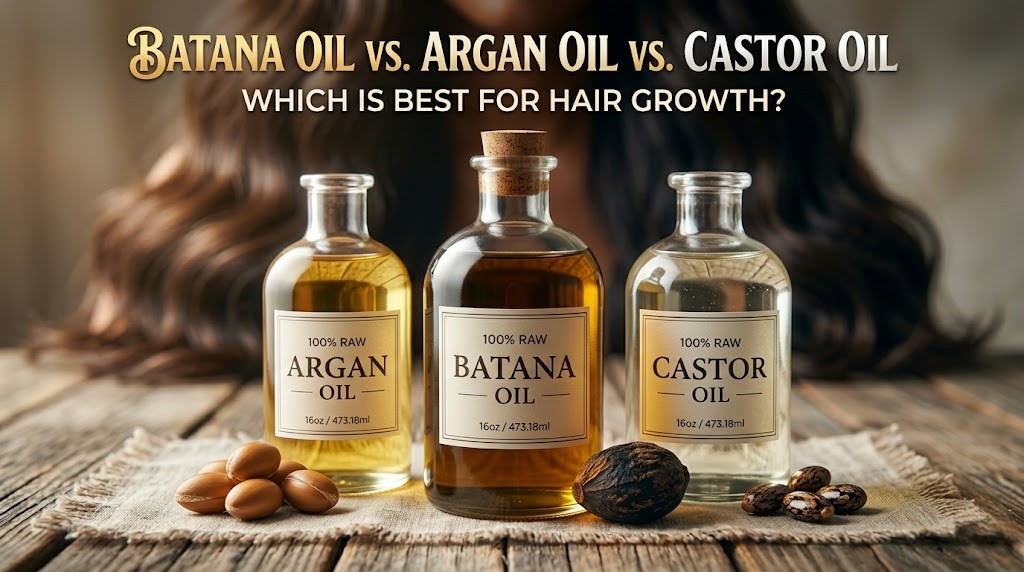
Walk into any beauty aisle — or scroll through your social feed for five minutes — and you’ll find passionate defenders of all three. Castor oil has its loyal devotees swearing by it for edges and thickness. Argan oil is the “liquid gold” that dominated beauty counters for over a decade. And batana oil is the newcomer that’s been blowing up everywhere from TikTok to Reddit hair communities.
So which one actually wins when it comes to hair growth?
The honest answer — and I say this as someone who’s dug into the research — is that these three oils are not really competitors. They’re more like different tools for different jobs. But if you want to know which does what best, which has the strongest science behind it, and which one your specific hair situation calls for, you’ve come to the right place.
Let’s break it all down.
Quick Overview: What Each Oil Is
Before diving into the head-to-head, here’s a fast snapshot of where each oil comes from and what’s actually inside it.
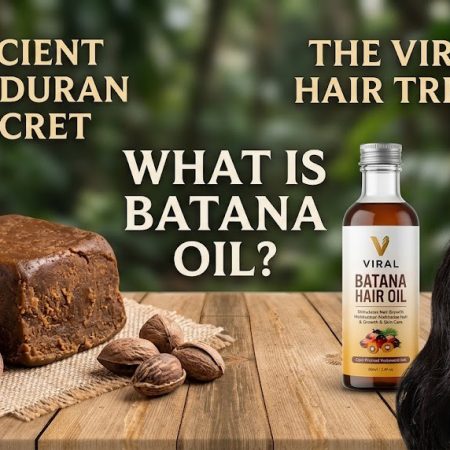
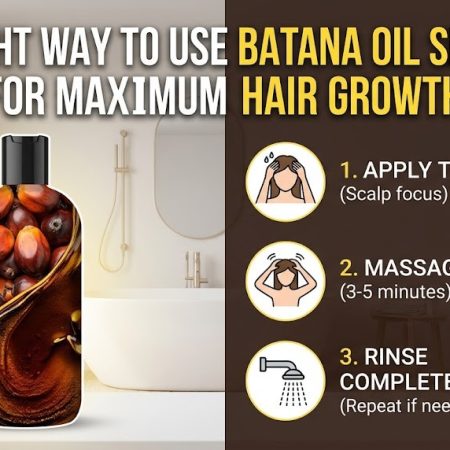
Batana Oil is extracted from the nuts of the American oil palm (Elaeis oleifera), native to the Honduran rainforest. For centuries, the Miskito Indigenous people of La Moskitia — sometimes called “the people of beautiful hair” — have used it as a daily hair treatment. Its key compounds are oleic acid, linoleic acid, tocotrienols (Vitamin E), and beta-carotene. It comes in a thick, rich, dark amber paste with a distinct earthy scent.
Argan Oil comes from the kernels of the argan tree (Argania spinosa) in Morocco, where Berber women have used it for generations. It’s about 80% unsaturated fatty acids — primarily oleic and linoleic acid — plus substantial Vitamin E and polyphenols. It’s lightweight, fast-absorbing, and has a mild nutty scent.
Castor Oil is pressed from the seeds of the castor bean plant (Ricinus communis). Its defining feature is ricinoleic acid, which makes up 85–90% of its fatty acid profile — a composition unlike any other natural oil. It’s famously thick, viscous, and slow to absorb.
The Science Behind Each Oil
Batana Oil: Deep Repair + Follicle-Level Nourishment
The research picture for batana oil as a whole ingredient is still developing — there are no large clinical trials specifically on batana oil for hair growth yet. But the individual compounds inside it have attracted serious scientific attention.
Linoleic acid, one of batana’s primary fatty acids, has been shown in Korean research to increase proliferation of dermal papilla cells — the cells that control the entire hair growth cycle — by over 21% at a targeted concentration. The same compound activates the Wnt/β-catenin signaling pathway, a key pathway for follicular regeneration, and stimulates growth factors including VEGF, IGF-1, and KGF. Linoleic acid also has the potential to inhibit 5-alpha reductase, the enzyme that converts testosterone to DHT, the hormone most linked to pattern hair loss in men and women.
Oleic acid — the dominant fatty acid in batana oil — has been shown in animal studies to accelerate the onset of the anagen (active growth) phase by 3 to 4 days. It also significantly improves transdermal absorption, helping other nutrients penetrate deeper into the scalp where follicles actually live.
Then there are the tocotrienols — batana’s form of Vitamin E. A randomized, double-blind, placebo-controlled trial published in Tropical Life Sciences Research found that tocotrienol supplementation produced a 34.5% increase in hair count over 8 months compared to placebo. This was an oral study, so topical absorption introduces an open question — but the underlying mechanism (protecting follicle cells from oxidative stress that causes premature shedding) is real and well-documented.
Finally, batana’s carotenoid content (beta-carotene: 52–60%, alpha-carotene: 33–36%) protects follicles from the kind of oxidative damage that pushes hair into the catagen (resting/shedding) phase too early. A 2024 review in Biomedicine & Pharmacotherapy confirmed this connection between oxidative stress and premature follicle miniaturization.
Bottom line on batana: Promising ingredient-level science with strong traditional evidence. Excels at deep conditioning, scalp repair, and creating the biological conditions for healthier growth.
Argan Oil: The Protective Finisher
Argan oil’s reputation is enormous — but when you look at the clinical evidence specifically for hair growth, it’s thinner than most people realize.
A systematic review by researchers at the University of California, Irvine (published in Journal of Drugs in Dermatology, 2022) analyzed 22 studies on coconut, castor, and argan oils. Their conclusion on argan oil was pointed: only a single study suggested potential to improve hair quality, and it was no more effective than silicone-based conditioners. There is currently no published research demonstrating that argan oil prevents hair loss or stimulates new hair growth in humans.
That doesn’t mean argan oil is useless — far from it. Where it genuinely delivers:
A 2013 study found argan oil reduced hair damage caused by hair dye when applied after color processing
Its oleic and linoleic acids are proven to lubricate the hair shaft, reduce combing force, protect against breakage during heat styling, and reduce split ends
Its high Vitamin E content acts as a powerful antioxidant, protecting hair from UV and environmental free radical damage
Its oleic acid content helps regulate sebum secretion on the scalp — helpful for both overly oily and overly dry scalps
Argan is also the lightest of the three oils, making it the easiest to use daily without feeling greasy or weighing hair down. For fine hair especially, this is a meaningful advantage.
Bottom line on argan: Excellent protective and conditioning oil. The “liquid gold” reputation is well-earned for shine, frizz control, and damage protection. Not a growth oil in any clinical sense — more of a preservation oil.
Castor Oil: The Scalp Stimulator
Castor oil has one of the loudest fan bases in the natural hair community — and some genuinely interesting science behind it, alongside some real gaps.
The star compound is ricinoleic acid, which makes up about 85–90% of castor oil’s composition. Here’s what the research actually shows:
Ricinoleic acid has been identified as an inhibitor of prostaglandin D2 synthase (PGD2). This matters because a landmark 2012 study in Science Translational Medicine found PGD2 significantly elevated in the scalps of men with androgenetic alopecia — and demonstrated that PGD2 suppresses follicle activity by binding to receptors on dermal papilla cells. If ricinoleic acid inhibits PGD2 synthesis, that’s a genuinely credible mechanism for combating pattern hair loss. NIH-published research on indigenous hair oils confirmed that ricinoleic acid “has been demonstrated to have some degree of effect on hair growth” through this prostaglandin pathway.
Ricinoleic acid is also strongly anti-inflammatory and antimicrobial — research in the Journal of Applied Microbiology found it exhibits antibacterial activity against common scalp pathogens, which creates a cleaner environment for healthy follicle function.
Here’s the honest caveat: there is still no large, well-controlled clinical trial directly proving that topical castor oil grows hair. The PGD2 mechanism is pharmacologically credible, but “credible mechanism” is not the same as “proven outcome.” And despite widespread belief online, castor oil does not actually thicken individual hair strands — it coats and conditions, but does not alter follicle diameter.
The practical downside: castor oil is incredibly thick and notoriously hard to wash out. Overuse can lead to scalp buildup and, in some cases, folliculitis. Most hair care experts recommend diluting it with a lighter carrier oil.
Bottom line on castor: Strong theoretical basis for growth support, especially for pattern-related hair loss. Real anti-inflammatory and antimicrobial benefits for scalp health. No direct clinical trial yet. Best used as a targeted scalp treatment, not a daily all-over oil.
Head-to-Head Comparison at a Glance
Feature
Batana Oil
Argan Oil
Castor Oil
Primary fatty acid
Oleic + Linoleic
Oleic + Linoleic
Ricinoleic (85–90%)
Texture
Thick, rich paste
Light, liquid
Very thick, viscous
Scalp penetration
Deep
Moderate
Moderate
Hair shaft penetration
Deep
Surface/cuticle
Surface coating
Clinical trials (direct)
None yet
None for growth
None for growth
Component-level science
Strong (linoleic, tocotrienols)
Moderate (Vit E, oleic)
Strong (ricinoleic/PGD2)
Best for
Repair + scalp health
Protection + shine
Scalp stimulation
Worst for
Fine hair (can be heavy)
Very dry/damaged hair
Daily use (too thick)
Traditional use
Centuries (Miskito, Honduras)
Centuries (Berber, Morocco)
Long-standing in Afro-Caribbean communities
Ease of use
Medium
Easy
Difficult
Which Oil Wins for Specific Hair Concerns?
Rather than picking one winner, here’s how each oil maps to real hair problems:
If your main concern is hair thinning or early-stage loss:
Batana oil is your best bet among the three. Its linoleic acid’s potential 5-alpha reductase inhibition, combined with tocotrienol antioxidant protection and oleic acid’s anagen-phase acceleration, gives it the most well-rounded approach to the biological conditions around hair thinning. Castor oil is a credible runner-up for scalp stimulation through the PGD2 pathway.
If your hair is severely damaged, over-processed, or brittle:
Batana oil wins here clearly. Its oleic acid penetrates deeply into the hair cortex (not just coating the surface), and its rich nutrient profile repairs the shaft from within. Argan oil is useful for surface protection but doesn’t offer the same depth of repair for truly damaged strands.
If you need daily, lightweight moisture without buildup:
Argan oil is the right choice. It’s the most user-friendly of the three — fast-absorbing, non-greasy, and suitable for daily use on all hair types. Neither batana nor castor oil is practical as a daily treatment.
If you have a dry, flaky, or inflamed scalp:
Batana oil and castor oil both shine here. Batana’s anti-inflammatory fatty acids and tocotrienols soothe scalp irritation and may combat the Malassezia fungus associated with dandruff. Castor’s ricinoleic acid has documented antimicrobial effects and strong anti-inflammatory properties. Argan can also help with mild dandruff but is less targeted.
If you have fine or low-porosity hair:
Argan oil is the winner. Its lightweight texture won’t weigh down fine strands or block moisture from entering low-porosity hair. Batana oil, being the thickest of the three, works best on medium-to-coarse hair. Castor should be heavily diluted and used sparingly on fine hair.
If you have thick, coarse, or curly/textured hair:
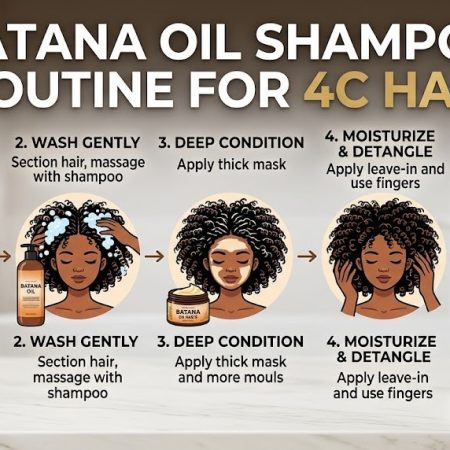
Batana oil is ideal. Its thick, rich consistency provides the intensive moisture that coarser textures tend to drink up, and it’s particularly praised in the curly hair community for curl definition and frizz control.
Can You Use All Three Together?
Yes — and honestly, this is what many experienced naturalistas end up doing. These oils address different aspects of hair health, and they don’t compete with each other.
A smart combination approach:
Batana oil as a weekly deep-conditioning scalp and hair mask (30 minutes to overnight)
Castor oil as a targeted scalp treatment focused on areas of thinning (2–3 times per week, massaged in)
Argan oil as a daily finishing oil on dry hair for protection, shine, and frizz control
This gives you the deep repair and scalp nourishment of batana, the targeted growth-support mechanism of castor, and the daily protective benefits of argan — without overloading your scalp with any single heavy oil.
What About Side Effects and Safety?
All three oils are generally safe for topical use. A few things to keep in mind:
Batana oil: Patch test recommended if you have sensitivity to palm oil or tree nuts. Its richness means less is more — overuse can cause greasiness and buildup. Always shampoo thoroughly after use.
Argan oil: Pure argan oil is well tolerated. Watch out for commercial argan oil products that contain sulfates, silicones, and synthetic fragrances — these added ingredients can irritate the scalp and trigger temporary shedding, not the argan oil itself.
Castor oil: The most likely of the three to cause issues if overused. Its extreme thickness can clog follicles and lead to folliculitis (inflamed hair follicles) if it builds up on the scalp. Always dilute with a lighter oil (jojoba, argan, or sweet almond oil work well) and wash out thoroughly.
The Honest Verdict
Here’s the thing no one wants to hear, but I’ll say it anyway: none of these three oils have been proven in large clinical trials to grow hair. That’s just the current state of the research. If you want a natural oil with genuinely strong clinical backing for hair regrowth, rosemary oil is currently the front-runner — a 2015 study found it as effective as minoxidil for androgenetic alopecia.
But within the comparison of batana, argan, and castor:
Batana oil has the most comprehensive nutrient profile and the strongest component-level science for supporting the conditions in which hair grows best — particularly through linoleic acid’s follicle-level effects and tocotrienol antioxidant protection. It’s also the most versatile: scalp health, deep conditioning, breakage reduction, and growth support all in one.
Castor oil has the most targeted potential mechanism for pattern hair loss specifically, through ricinoleic acid and the PGD2 pathway. It’s a powerful scalp oil, but its limitations in texture and daily use make it a specialist tool, not an all-rounder.
Argan oil is the most practical daily-use oil, and genuinely excellent for protection and shine — but calling it a “hair growth oil” is a stretch the evidence doesn’t support.
For most people building a serious natural hair care routine, the real answer isn’t choosing one. It’s using each where it’s strongest.