I’ll be honest with you: I was skeptical going into this.
I’d already seen the TikToks. The dramatic before-and-afters. The influencers holding up what looked like completely transformed hair and saying batana oil did it in three weeks. I’d read enough about natural hair care to know that extraordinary claims deserve extraordinary scrutiny.
But I also couldn’t deny the curiosity. Batana oil — pressed from the nuts of the American oil palm, used for centuries by the Miskito people of Honduras — kept coming up in serious hair care communities, not just viral videos. People whose opinions I trusted were talking about it. So I decided to stop wondering and actually test it myself.
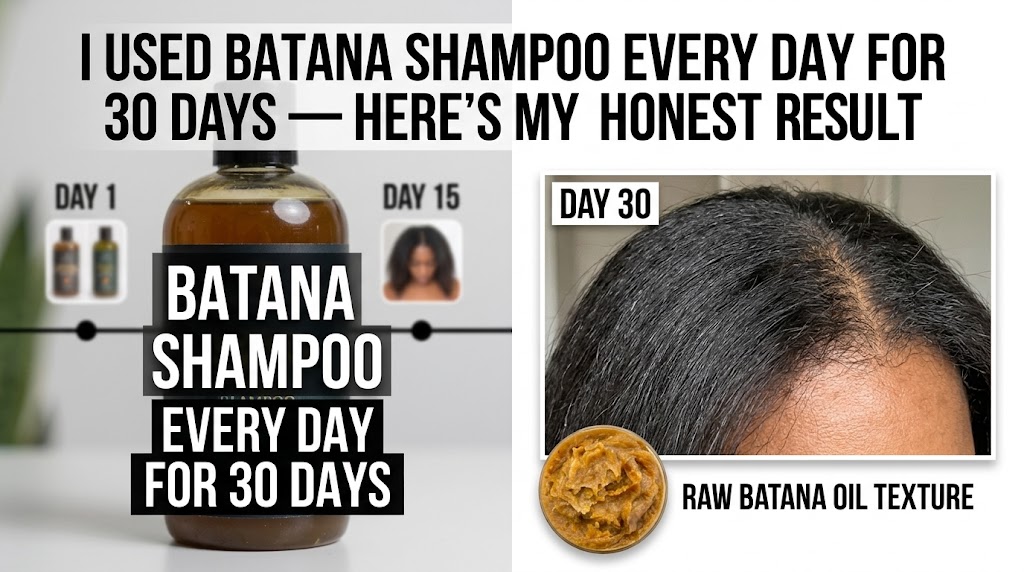
For 30 days straight, I washed my hair every single day with a batana oil shampoo. No breaks, no switching up the routine, no blending in other products halfway through. Just batana oil shampoo, conditioner, and consistency.
Here’s everything that happened — the good, the surprising, and the parts nobody on TikTok ever talks about.
My Hair Before: What I Was Working With
Before you read my results, you need to know my starting point — because results from any hair product depend enormously on what kind of hair you start with.
My hair is medium thickness, naturally wavy with a tendency to frizz in humidity. I’d done a keratin treatment about eight months prior, which had left my hair significantly smoother but also noticeably drier and more prone to breakage at the ends. My scalp runs normal-to-dry, meaning I don’t get oily quickly, but I also don’t produce enough natural oil to keep my ends moisturized without help.
My main complaints going in:
Dryness and brittleness, especially from mid-length to ends
A lot of shedding during washing (more than my old normal)
Frizz that made second-day hair almost unwearable
A scalp that felt tight and occasionally flaky in winter
I wasn’t dealing with significant hair loss or balding — just the kind of cumulative hair damage most people accumulate over years of heat styling, chemical treatments, and honestly not taking great care of it.
The Decision to Wash Daily — And What Science Actually Says
I want to address this upfront, because I know “washing every day” is going to raise some eyebrows in the natural hair community.
The conventional wisdom is that daily washing strips your scalp of its natural sebum and causes damage. And there’s truth to that — but it’s more nuanced than the headline.
A study reviewed by the NIH and published in the International Journal of Cosmetic Science found that daily washing with a well-formulated, mild shampoo showed no significant loss in internal hair lipids compared to less frequent washing. Subjects actually self-reported dramatically better outcomes at the higher wash frequency — less frizz, reduced dryness, less breakage, and a healthier-feeling scalp. The key phrase is “well-formulated, mild shampoo.” Harsh sulfate-heavy formulas are a different story — those can strip the scalp barrier if used daily, triggering a cycle of overproduction and irritation that leaves your scalp worse off than before.
This is where batana oil shampoo becomes the interesting variable. A quality batana oil shampoo is typically sulfate-free, and infused with the same oleic acid, linoleic acid, and tocotrienols found in the raw oil. The goal is a shampoo that cleanses without stripping — keeping your scalp clean without leaving it vulnerable. That was my hypothesis going in.
Week 1: The Adjustment (Days 1–7)
The first thing that hit me was the scent. Batana oil has a very distinctive aroma — earthy, smoky, a little like roasted coffee or dark chocolate mixed with something woodsy. If you’re used to the perfumed sweetness of commercial shampoo, you’ll notice it immediately. I wasn’t put off by it, but I want to be upfront: it’s strong during application. The good news is that it completely disappeared after rinsing. Zero lingering odor on dry hair.
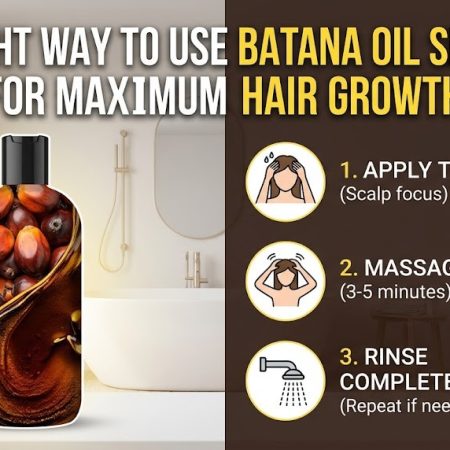
Lather was lighter than a sulfate shampoo, but enough to feel like a real cleanse. I made a point of massaging my scalp for about two minutes before rinsing.
Hair felt noticeably softer after the very first wash. My skeptic brain immediately flagged this as “could be temporary surface coating” — but it returned wash after wash, so I couldn’t keep dismissing it.
By day four, something I hadn’t specifically been watching for: the tightness in my scalp was easing. That uncomfortable pulling sensation I’d sort of normalized — especially along my hairline — had quietly started to lift.
Shedding during washing: Still heavy in week one. No change yet.
Week 2: Something Starts to Shift (Days 8–14)
Week two is where the experiment got genuinely interesting.
Day nine: my second-day hair looked okay. Not styled, not touched, just — okay. For anyone with frizz-prone hair, you know what a statement that is. The halo of frizz I usually deal with from mid-shaft downward was noticeably reduced.
My ends, which had been brittle and prone to snapping when I ran a wide-tooth comb through them, were detangling without the usual resistance. I was losing noticeably less hair during the combing process.
The moisture retention story was real. Hair washed in the morning was still soft by evening instead of reverting to the dry, straw-like texture I’d gotten used to. This felt like a genuine change in the hair shaft’s ability to hold onto hydration — consistent with what the research on oleic acid’s deep penetration into the hair cortex would predict.
I also want to be transparent about what wasn’t happening yet: no visible new growth, no dramatic thickness change. The improvements were real, but they were firmly in the territory of texture, softness, and manageability.
Shedding during washing: Started dropping noticeably around day 11.
Week 3: The Compounding Effect (Days 15–21)
There’s something about consistent daily use that works differently from an occasional weekly treatment. Week three felt like the point where the investment compounded.
My natural wave pattern — which the keratin treatment had flattened — was starting to return. Not dramatically, but there was more definition happening without me doing anything to encourage it. This caught me off guard more than anything else in the 30 days.
The scalp situation was genuinely transformed. The occasional flakiness I’d mentioned in my baseline? Gone. My scalp felt balanced in a way it hadn’t in a long time — not dry, not oily, just even. I attributed this to the batana oil’s anti-inflammatory fatty acids getting a daily, gentle dose at the scalp level, rather than the once-weekly hit of raw oil I’d tried before.
One honest caveat for week three: I had one day around day 17 where my hair felt weighed down and slightly dull. I’d used a bit too much shampoo — batana oil formulas are richer than standard shampoos, and a small amount really does go further than you’d expect. Less product the next day fixed it immediately.
Week 4: Final Stretch (Days 22–30)
By the final week, my hair had settled into what felt like a new baseline. The softness and reduced frizz weren’t daily surprises anymore — they were just what my hair was doing.
The breakage improvement was the most measurable thing I tracked. In week one, I was pulling out visible snapped strands on my comb every session. By week four, shed hair during washing had dropped to what I’d consider healthy normal — the kind of shedding that’s just the natural end of the growth cycle, not structural breakage.
The scalp ended up being the standout result of the whole experiment. After 30 days of daily gentle cleansing without stripping, it felt more balanced and healthy than it had in years. A forum user on the Hair Restoration Network who ran their own batana oil experiment put it almost exactly the way I’d phrase it: they were pretty sure it wouldn’t regrow hair, but their hair looked better than it had in over 20 years. That resonated with my landing spot.
Did I see new hair growth? Possibly a few baby hairs at my temples, but I’m not claiming them. Hair grows roughly half an inch per month — any new growth triggered by improved scalp conditions wouldn’t be visible in 30 days. Anyone claiming dramatic regrowth in under six weeks from any shampoo is overselling.
My Honest Verdict: What Changed, What Didn’t
Clearly improved:
Hair softness and texture (from day one, consistent throughout)
Frizz control, especially second-day hair
Reduced breakage during combing and washing
Scalp health — flaking gone, tightness gone, balanced sebum
Natural curl and wave definition returning
Overall styling ease and manageability
No change (or can’t claim it):
No dramatic visible regrowth in 30 days
No reversal of any structural thinning
No magic overnight transformation
What surprised me most: The scalp improvement. I went in focused on my ends and came out most impressed by what daily gentle cleansing did for the health of my actual scalp. That’s probably the more significant long-term win — a healthier scalp means better conditions for follicles to do their job.
Should You Try It?
Here’s my real answer: yes, if you go in with realistic expectations.
Consistent use of a quality batana oil shampoo did everything a good nourishing, gentle shampoo should do — and delivered genuine visible improvements in texture, frizz control, breakage, and scalp health. The batana oil compounds that look promising in the underlying science (oleic acid for deep penetration, linoleic acid for follicle health, tocotrienols for antioxidant protection) seem to translate into real, daily-use benefits.
If you’re expecting a shampoo to grow back a hairline in 30 days, nothing will deliver that. But if you want hair that’s progressively softer, more manageable, and less prone to breakage — with a scalp that finally feels balanced — this is worth committing to.
I’m still using it past day 30. That’s probably the most honest thing I can tell you.
Practical Tips From 30 Days of Daily Use
A few things I learned that’ll save you the first-week fumbling:
Use less than you think. Batana oil shampoos are richer than standard formulas. Start with a small amount — the size of a hazelnut — and add more only if needed.
Focus the massage on your scalp. Two solid minutes of circular fingertip massage before rinsing makes a real difference for scalp circulation and product absorption.
Give it three weeks minimum before judging. Week one shows softness. Week two shows frizz and breakage changes. Week three is where the compounding effect becomes clear.
The scent is strong but temporary. It fully rinses out. Most people find it comforting once they’ve been using it for a few days.
Patch test first if you have palm oil sensitivity. Batana is derived from the American oil palm — worth checking before going all-in.
The 30-Day Timeline at a Glance
Timeframe
What to Expect
Days 1–3
Immediate softness; adjusting to scent and richer formula
Days 4–7
Scalp begins to feel more comfortable and less tight