
If your social media feed has recently been flooded with before-and-after hair transformation videos, glossy amber bottles, and captions promising “the miracle oil the beauty industry doesn’t want you to know about” — you’ve already met batana oil. Even if you didn’t know its name yet.
But batana oil is not a lab invention or a marketing department’s dream. It’s something far older and more interesting than that.
This is the story of what batana oil actually is — where it comes from, why it’s been treasured for centuries in a remote Honduran rainforest, what’s actually inside it, how it went from Indigenous tradition to viral TikTok sensation, and what you genuinely need to know before you buy a bottle.
The Short Answer: What Is Batana Oil?
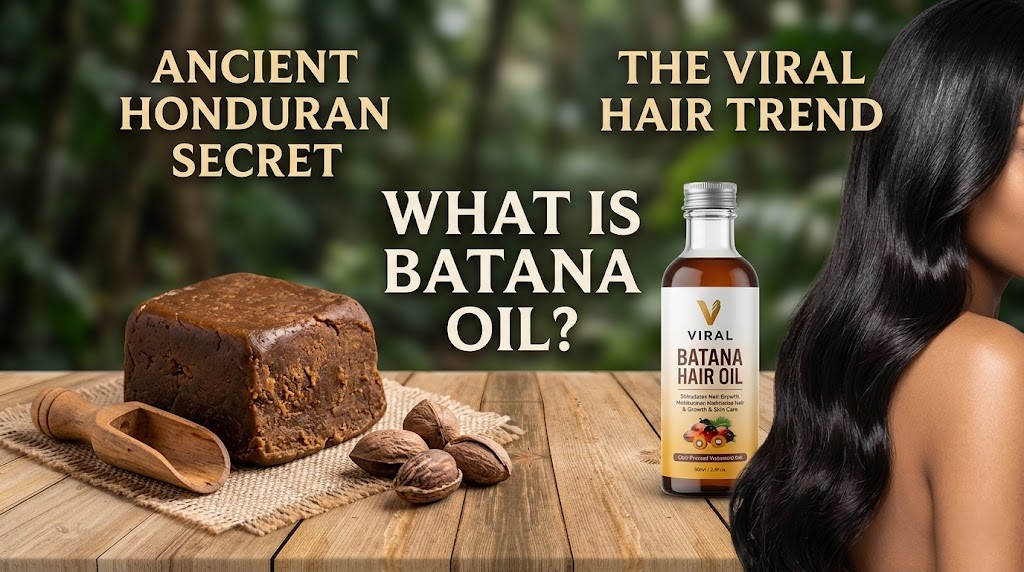
Batana oil is a nutrient-rich, dark amber oil extracted from the nuts of the American oil palm tree (Elaeis oleifera), native to the tropical rainforests of Central and South America. It is produced primarily in Honduras — specifically in the remote La Mosquitia region along the Caribbean coast — and has been used for centuries by the Indigenous Miskito people as a daily hair and skin treatment.
You may also see it called ojon oil, particularly in older beauty contexts where it was marketed under that name. Same oil, different branding.
In its raw, unrefined form, batana oil is technically a thick paste at room temperature — not the liquid you might expect from the name “oil.” It has a distinctive deep brown color and an earthy, smoky, roasted-coffee scent. Warm it slightly between your palms, and it melts into a silky, golden-brown liquid that penetrates hair with impressive depth.
It’s not a synthetic blend, not a processed formula, and not a recent invention. It’s essentially the same product that Miskito women have been pressing by hand for over 500 years.
Where Batana Oil Comes From: A Place Most People Will Never See
To understand batana oil, you have to understand La Mosquitia.
La Mosquitia is one of the last truly untouched rainforests in the Western Hemisphere. It sits along Honduras’s Caribbean coast and into Nicaragua — a vast, biodiverse wilderness of rivers, wetlands, and forest accessible mainly by small plane or boat. There are no highways cutting through it. It remains one of the most isolated and ecologically intact regions in Central America.
This is where the American oil palm (Elaeis oleifera) grows wild, along riverbeds and in lowland forest. The trees aren’t farmed or cultivated — they grow on their own terms, and have for millennia. The palm produces small, dark fruits whose nuts contain the oil-rich kernels that become batana oil.
The Miskito people — the Indigenous community whose home this has always been — are sometimes called the Tawira, meaning “people of beautiful hair.” That name is not incidental. Their hair has been a point of pride and cultural identity for as long as anyone can trace, and batana oil has been central to how they’ve cared for it.
500 Years of Tradition: How the Miskito People Use Batana Oil
The knowledge of batana oil has been passed from mother to daughter through generations of Miskito families, embedded in daily life rather than written down in any document. It is not a recipe that was invented — it is a practice that evolved slowly over centuries of living alongside these palm trees in one of the most biodiverse ecosystems on earth.
The traditional extraction process is genuinely labor-intensive. It goes something like this:
Step 1 — Harvesting: Women collect ripe nuts from wild American oil palms. Ripeness is judged by color and texture — knowledge that takes years to learn and is passed down through observation, not instruction manuals.
Step 2 — Boiling: The harvested nuts are boiled in water to soften the outer pulp and loosen the oil-rich kernel inside.
Step 3 — Roasting: The kernels are roasted over open wood fires. This is the step that gives traditional batana oil its characteristic dark color, smoky depth, and roasted-coffee scent. It also enhances the oil’s stability. By some accounts, it takes approximately 8,000 nuts to produce just one litre of this oil — which tells you something about why it has always been precious.
Step 4 — Grinding: The roasted nuts are ground by hand into a thick paste using traditional stone tools or grinding methods.
Step 5 — Pressing and separating: The paste is simmered in water, allowing the oil to separate and rise to the surface, where it is carefully skimmed and collected.
What comes out is raw batana oil — unrefined, minimally processed, retaining its full spectrum of fatty acids, vitamins, and antioxidants in a way that heavy commercial processing would destroy.
In Miskito communities, batana oil has traditionally been used for more than hair. Women apply it to the scalp and strands as a daily treatment, use it to protect hair from the tropical sun and saltwater, treat dry and damaged ends, and apply it before and after protective styles. Beyond hair, it has been used for skin moisturizing, treating burns and insect bites, and in healing practices and ceremonies. To the Miskito people, batana oil is not merely a cosmetic product — it is a cultural artifact and a living tradition.
What’s Actually Inside Batana Oil: The Nutrient Profile
The reason batana oil does what it does comes down to chemistry. Here’s what’s packed inside it:
Oleic Acid (Omega-9) — The Deep Penetrator
The dominant fatty acid in batana oil, oleic acid (roughly 55% of its composition) is a monounsaturated fat with a molecular structure small enough to penetrate deep into the hair cortex — not just coat the surface. This is the primary reason batana oil moisturizes from within rather than sitting on top of the hair like a film. In animal studies, topical application of oleic acid has been shown to accelerate the onset of the active hair growth phase (anagen) by several days.
Linoleic Acid (Omega-6) — The Follicle Activator
Making up roughly 15% of batana oil’s fatty acid profile, linoleic acid has attracted some of the most interesting research attention. Korean researchers found it increases proliferation of dermal papilla cells — the cells that control the hair growth cycle — by over 21%. It also activates the Wnt/β-catenin signaling pathway important for follicular regeneration, and stimulates growth factors including VEGF, IGF-1, and KGF. Separately, linoleic acid may inhibit 5-alpha reductase, the enzyme that converts testosterone into DHT — the hormone most associated with pattern hair loss in men and women.
Palmitic Acid — The Structural Supporter
At around 24% of the composition, palmitic acid helps coat and protect the hair shaft, reducing moisture loss and providing a natural protective layer around each strand.
Tocotrienols (Vitamin E) — The Antioxidant Shield
Batana oil’s form of Vitamin E is particularly potent. A randomized, double-blind trial published in Tropical Life Sciences Research found that tocotrienol supplementation produced a 34.5% increase in hair count over 8 months compared to placebo, attributed to the antioxidants’ ability to neutralize free radicals that push follicles prematurely into the resting/shedding phase. (Note: that study was oral supplementation — topical absorption is a separate question still being studied, but the underlying mechanism is real.)
Beta-Carotene and Alpha-Carotene
The carotenoids — primarily beta-carotene (52–60%) and alpha-carotene (33–36%) — are what give batana oil its characteristic golden-amber color. They act as antioxidants protecting follicle cells from oxidative damage that can accelerate hair miniaturization and shedding. A 2024 review in Biomedicine & Pharmacotherapy confirmed that oxidative stress blocks the Wnt/β-catenin pathway and accelerates premature entry of follicles into the resting phase — making these antioxidants genuinely meaningful for scalp health.
Trace Minerals and Amino Acids
Raw batana oil also contains trace amounts of iron, zinc, selenium, and amino acids including cysteine and methionine — all important supporting players in keratin production and hair structure.
What Batana Oil Looks, Smells, and Feels Like
If you’ve never used batana oil before, knowing what to expect physically saves a lot of confusion when your first jar arrives.
Appearance: Raw batana oil is a dark brown paste at room temperature — closer to the consistency of a thick body butter or shea butter than what you’d typically think of as an “oil.” This is normal and expected. It’s a sign of minimal processing.
Color: Deep amber to dark brown, sometimes with reddish tones. The color comes from the high carotenoid content.
Scent: This is the part that surprises most first-time users. Batana oil smells strongly of roasted coffee, dark chocolate, and smoke — earthy and distinctive. It’s a polarizing scent initially, but most users find it comforting and pleasant by the second or third use. Critically: the scent fully disappears from hair after rinsing. There is no lingering odor on dry hair.
Texture: It melts on contact with body heat — warm a small amount between your palms and it becomes a liquid oil that absorbs quickly.
At room temperature vs. warmed: At cooler temperatures it’s a solid paste; slightly warmed (between your palms or briefly in a warm water bath), it becomes a pourable liquid. Both forms are the same product.
Batana Oil vs. Palm Oil: An Important Distinction
A question worth addressing clearly: is batana oil just palm oil?
No — and the difference matters.
The palm oil you find in processed foods and cheap cosmetic formulations is typically derived from Elaeis guineensis, the African oil palm, through high-volume industrial extraction involving chemical solvents and heavy refining. It’s a mass commodity product.
Authentic batana oil comes from Elaeis oleifera, the American oil palm — a related but distinct species with a different fatty acid profile (notably much higher in oleic acid than the African palm). It is traditionally extracted without chemical solvents, retaining its full nutritional profile.
There is one important caveat worth knowing: due to soaring global demand and the fact that Elaeis oleifera produces relatively small quantities of oil, some sellers have begun mixing in or substituting African palm oil or hybrid palm oil. Not all products labeled “batana oil from Honduras” are authentic oleifera oil. We’ll address how to spot authentic batana oil below.
The TikTok Moment: How Batana Oil Went Global
For centuries, batana oil was essentially unknown outside of Honduran Indigenous communities and a small circle of natural beauty specialists. That changed dramatically around 2023–2024.
Following the massive TikTok-driven popularity of rosemary oil and castor oil for hair growth, batana oil was next. Data from TikTok Shop revealed a 168% increase in users searching for batana oil during a single week in September 2024 alone. Cosmetics Business named it the new scalp care hero, noting that it reflected “a growing consumer interest in the discovery of natural oils that offer specific benefits for the scalp.”
The ingredient had also been quietly circulating in natural Black hair care communities for longer, partly connected to the legacy of Dr. Sebi — the late Honduran-born natural health advocate who championed plant-based healing and is said to have referenced batana oil in his teachings. That connection gave the oil a devoted early following in communities already oriented toward indigenous plant remedies.
It also had a brief earlier life in mainstream beauty. In the 2000s, it was marketed under the name ojon oil in prestige beauty — a more palatable name at the time for a Western market. But that version was expensive, often processed, and removed from its roots. The current batana oil wave is different: it’s raw, it’s authentic (when you buy correctly), and it comes with its cultural story intact.
The global hair oil market was valued at $4.31 billion in 2021 and is projected to reach $6.04 billion by 2030. Batana oil’s rise is part of that larger movement toward natural, traditionally-rooted ingredients with a story behind them.
What Batana Oil Can — and Can’t — Do for Your Hair
Let’s be honest, because honesty is the only thing that builds long-term trust.
Batana oil reliably does:
- Deep condition and moisturize hair from within (not just coat the surface)
- Reduce breakage and brittleness by strengthening the hair shaft
- Soothe dry, flaky, or inflamed scalps
- Reduce frizz and improve second-day hair manageability
- Add natural shine without a greasy finish
- Support a healthier scalp environment that may benefit follicle function over time
Batana oil does not:
- Have large-scale clinical trials proving it directly regrows hair in humans
- Reverse advanced genetic hair loss where follicles have closed
- Gray hair reversal (no evidence supports this claim)
- Work overnight — results, especially for texture and scalp health, build over consistent use
The important nuance: “no large clinical trials specifically on batana oil” doesn’t mean the ingredients inside it are unstudied. The component-level research on linoleic acid, tocotrienols, and oleic acid is real and meaningful. But responsible communication means being clear about what has been proven at the ingredient level versus what the oil itself has been trialed for in large human studies.
How to Spot Authentic Batana Oil
With demand exploding and prices attractive, fakes and diluted products have flooded the market. Here’s what real batana oil looks like and what to check before buying:
Real batana oil:
- Is a dark brown paste at room temperature (not a clear or pale liquid)
- Has a strong roasted coffee/smoky earthy scent before rinsing
- Comes from Honduras, ideally from the La Mosquitia region
- Lists Elaeis oleifera as the source (not just generic “palm kernel oil”)
- Is unrefined and minimally processed
- Often comes with sourcing information, a certificate of authenticity, or direct traceability to Miskito communities
Red flags:
- Clear, pale, or lightly colored liquid billed as raw batana oil
- No scent or a floral/perfumed scent (real batana oil has a very distinctive natural aroma)
- Vague sourcing (“tropical palm oil blend”)
- Unusually cheap pricing for what should be a labor-intensive, limited-supply product
- No ingredient list or ingredients listed only as “batana oil” without botanical name
The rise in global demand has also led to important questions around supply chain ethics. Authentic batana oil produced by Miskito communities is hand-extracted and genuinely scarce. When you buy from sources that verify direct community partnerships, you’re also supporting the people who created this tradition.
How to Use Batana Oil
Whether you’re using raw batana oil or a batana oil-infused shampoo, the principles are similar:
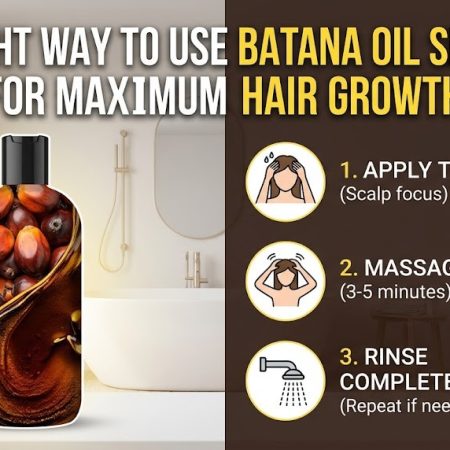
As a scalp and hair mask (raw oil): Warm a small amount between your palms until liquid. Massage into the scalp using circular motions for 5–10 minutes. Apply the remainder through mid-lengths and ends. Leave on for at least 30 minutes (or overnight with a shower cap for deeper conditioning). Shampoo out thoroughly — you may need two shampoo applications to fully rinse.
Added to shampoo or conditioner: A few drops added to your regular shampoo or conditioner bottle can introduce batana oil’s benefits into your existing routine more gently.
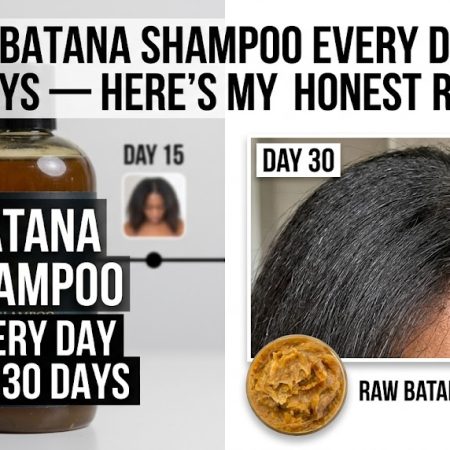
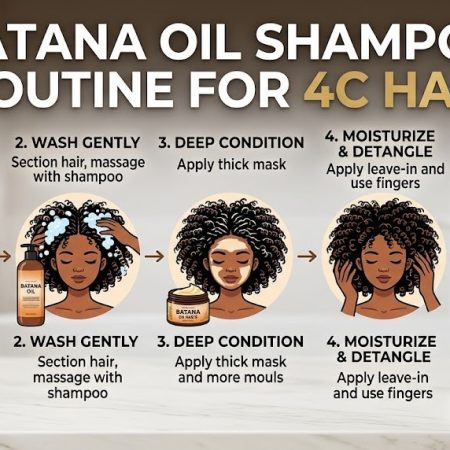
As a batana oil shampoo: A quality batana oil shampoo delivers the oil’s conditioning benefits within a cleanser formulated to work daily without stripping the scalp. This is often the most practical way to incorporate batana oil for regular users, especially those who wash their hair frequently.
How often: Raw oil treatment, 1–3 times per week. Batana oil shampoo, as needed based on your hair type.
Who benefits most: People with dry, damaged, or over-processed hair; those with dry or flaky scalps; textured or curly hair types that need intensive moisture; anyone experiencing increased breakage.
The Bottom Line
Batana oil is not a trend invented by a marketing team. It’s a 500-year-old Indigenous practice from one of the most remote and biodiverse rainforests in the Western Hemisphere, made by hand by the Miskito people of Honduras, now reaching a global audience that’s hungry for natural, rooted, meaningful alternatives to synthetic beauty products.
Its nutrient profile — oleic acid, linoleic acid, tocotrienols, carotenoids, trace minerals — gives it a solid scientific foundation for the conditioning, scalp nourishment, and breakage-reduction benefits its users consistently report. The large-scale clinical trials that would confirm its hair growth potential are still catching up. That’s not a failure of the oil — it’s simply where the research currently stands.
What has been proven across centuries is this: the Miskito people, living in a hot, humid, tropical environment with constant sun and saltwater exposure, maintained some of the most famously healthy, thick, and lustrous hair in the world. Batana oil was their daily tool. That’s not nothing.
Whether you’re new to batana oil or simply want to understand what you’ve been putting in your hair — now you know.