
Most people using batana oil shampoo are doing it wrong. Not dramatically wrong — they’re not damaging their hair or anything like that. But they’re leaving a significant amount of benefit on the table because of small technique mistakes that nobody ever told them about.
Using too much product. Rinsing with the wrong water temperature. Skipping the scalp massage entirely, or doing it too quickly to make a difference. Moving on after two weeks because they haven’t seen results yet.
This guide is about closing those gaps. Not to sell you on the product — you’ve presumably already chosen batana oil shampoo — but to make sure you’re actually getting what the ingredients are capable of delivering.
Why Technique Matters More Than You Think
Here’s something that rarely gets said: with a nutrient-dense ingredient like batana oil, how you apply it matters as much as what’s in it.
The fatty acids and antioxidants in batana oil shampoo — oleic acid, linoleic acid, tocotrienols — need certain conditions to penetrate effectively. Water temperature affects cuticle state. Massage technique affects follicle stimulation and absorption. Rinse thoroughness affects whether the scalp stays balanced or develops buildup. Application frequency needs to match your specific hair type or you’ll either miss out on benefits or create new problems.
This isn’t overthinking a shampoo. This is the difference between a product that sits in your shower and a routine that actually moves the needle on your hair health over time.
Step 1: Set Up Your Scalp Before a Single Drop Hits It
The two minutes before you even reach for your shampoo are more important than most guides acknowledge.
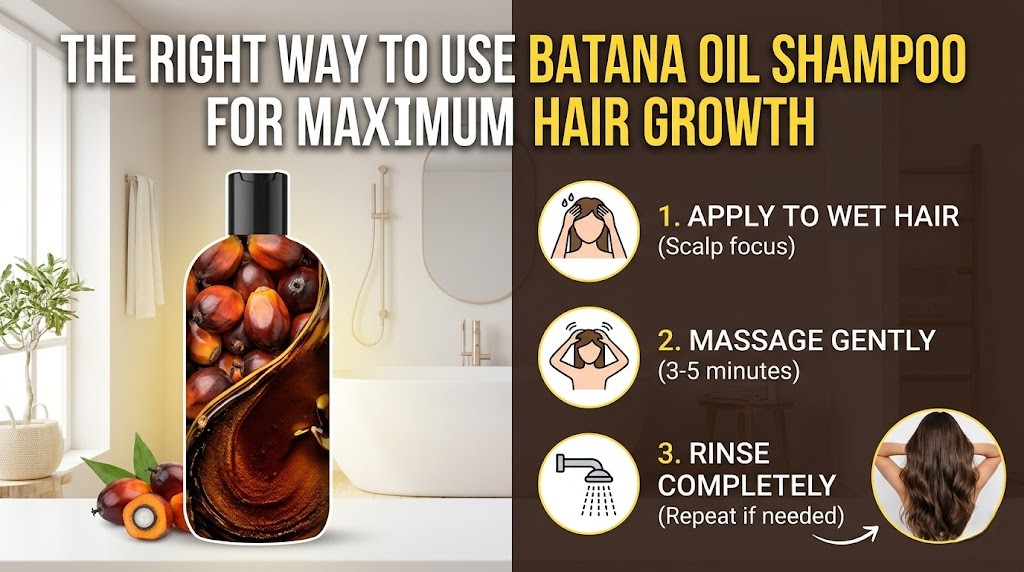
Start with a warm water pre-rinse. Soak your hair and scalp thoroughly with warm (not hot) water for at least 60 seconds before applying shampoo. This does two things: it softens sebum and product buildup that’s accumulated on your scalp so the shampoo can lift it more easily, and it gently opens the cuticle so the batana oil compounds in your shampoo have a better surface to interact with.
Avoid hot water. Hot water strips the scalp of its natural sebum — the protective lipid layer your skin maintains for a reason. When that layer is stripped repeatedly, the sebaceous glands overcompensate by producing more oil, creating a cycle that makes your scalp feel greasier faster. Warm water cleans just as effectively without that cost.
Detangle first if needed. If you have longer or textured hair, a quick detangle before wetting helps prevent breakage during the wash. Dry detangling with a wide-tooth comb before stepping in the shower means less manipulation (and less shed hair) during washing.
Step 2: Apply the Shampoo Correctly — Starting at the Scalp
This is the most commonly misunderstood step in any shampoo routine, but especially with a nutrient-rich formula like batana oil shampoo.
Your scalp is the target. Not your lengths.
The scalp is where follicles live, where sebum is produced, where buildup accumulates, and where the growth-supporting benefits of batana oil’s ingredients can actually reach the structures that need them. The lengths and ends of your hair — beautiful as they are — are dead cells. They benefit from the oil’s conditioning properties, but they don’t need to be your primary application zone.
How to apply: Dispense roughly the size of a quarter into your palm. For longer or thicker hair, a slightly larger amount is fine — but batana oil shampoos are typically richer than standard formulas, so less product usually goes further than you’d expect.
Apply the shampoo directly to your wet scalp, sectioning if needed for thick hair, and use your fingertips — not your nails — to distribute it across the scalp surface. Once the scalp is covered, work any remaining product through the lengths by gently squeezing it downward through your hair. Don’t scrub the lengths aggressively; let the product rinse through naturally.
Step 3: The Scalp Massage — The Step That Changes Everything
This is the step most people rush, and it’s also the step with the most compelling independent science behind it.
A 2016 study published in ePlasty (and reviewed by the NIH/PMC) tested standardized scalp massage on nine healthy men for just four minutes per day over 24 weeks. The result was a measurable increase in hair thickness — from 0.085mm to 0.092mm — an 8.2% improvement in hair diameter. The mechanism wasn’t just blood flow: the mechanical stretching forces applied to the scalp directly reached dermal papilla cells in the subcutaneous tissue, triggering gene expression changes that upregulated hair cycle-related genes including NOGGIN, BMP4, and SMAD4 while downregulating hair-loss-associated genes like IL6.
In a separate survey of 340 people who performed standardized scalp massage twice daily, 68.9% reported hair loss stabilization or regrowth. The effect correlated directly with total massage time invested.
This matters for your batana oil shampoo routine because you have a built-in opportunity for an effective scalp massage every time you shampoo — and most people waste it by spending 20 seconds absent-mindedly scrubbing before they rinse.
How to do it correctly:
Using your fingertips (pads, not nails), apply firm but comfortable pressure to the scalp. The therapeutic range identified in research is moderate pressure — firm enough to move the scalp tissue, not just slide across the surface, but never painful.
Use one of three motions:
- Circular: Small, deliberate circles across the entire scalp surface
- Back-and-forth: Gentle horizontal movements at each position
- Kneading: Gentle press-and-release pressure
The key is moving the scalp tissue, not just the hair. You should feel the skin beneath actually shifting slightly with each movement. That mechanical displacement is what transmits force to the dermal papilla cells.
Duration: Aim for a minimum of 4 minutes per wash. Work through the scalp in sections — hairline to crown, temples, nape of neck — to ensure every follicle zone receives attention.
Pairing with batana oil shampoo: The massage simultaneously stimulates blood circulation to deliver the oil’s nutrients directly to follicles and mechanically activates the dermal papilla cells. You’re getting two independent evidence-backed inputs at once — the ingredient benefits of the oil plus the mechanical benefits of structured massage.
Step 4: Let It Sit — Don’t Rinse Immediately
After massaging, let the lathered shampoo sit on your scalp for 1–2 minutes before rinsing. This gives the batana oil compounds extra contact time with the scalp and hair shaft.
This is especially worth doing if you’re using it as part of a hair growth routine, or if your scalp tends to be dry or irritated. The anti-inflammatory fatty acids need a moment to do more than just touch the surface.
This is also a good time to apply conditioner to your ends if you’re co-applying — the mid-lengths and ends can be conditioning while the scalp treatment is sitting. Just keep the conditioner away from your scalp.
Step 5: Rinse Correctly — Temperature and Thoroughness Both Count
Rinsing is where a lot of the technique value either gets locked in or squandered.
Start warm, finish cool. Begin rinsing with warm water to lift the shampoo and any dissolved buildup cleanly from the scalp and strands. Then finish with a 15–30 second cool water rinse. Cool water causes the hair cuticle to flatten and seal — locking in the moisture and nutrients the batana oil has delivered, and giving your hair its best shot at lasting shine and smoothness.
Rinse thoroughly. Run your fingers through your scalp as you rinse to confirm you’re not leaving shampoo residue behind. Any leftover product can weigh hair down, cause dryness at the scalp, or contribute to buildup over time. Residue also reduces the effectiveness of your next wash.
For follow-up conditioner: Apply to mid-lengths and ends only, let it sit for 2–3 minutes, then rinse with cool water.
Step 6: Dry Gently — The Often-Forgotten Damage Window
This is the most overlooked part of the whole routine, and it’s the one that undoes a lot of the benefit people just worked to create.
Wet hair is at its most structurally vulnerable. The cuticle is slightly open and the hair shaft is softer — meaning aggressive mechanical friction during drying causes breakage that no shampoo, however good, can prevent.
Do this instead:
- Squeeze (don’t rub) water from your hair using a microfiber towel or a plain cotton T-shirt. Both are significantly gentler on the cuticle than standard terry cloth towels.
- Press sections gently rather than scrubbing or towel-wrapping tightly.
- If you air-dry, give the hair 10–15 minutes of gentle natural drying before any brushing or combing.
- If you blow-dry, use medium heat with a diffuser on low airspeed. Point the nozzle downward along the shaft to encourage the cuticle to lay flat rather than lifting it.
How Often Should You Use Batana Oil Shampoo?
The right frequency depends on your hair type — and getting this right is one of the biggest levers for results.
Fine or oily hair: 3–4 times per week, or every other day. Fine hair gets weighed down more easily, so more frequent cleansing helps prevent buildup without the richness of batana oil accumulating. Use a smaller amount of product per wash.
Normal or combination hair: 2–3 times per week is the sweet spot for most people. This maintains scalp cleanliness and allows enough rest between washes for the oil’s nourishing compounds to keep working.
Dry, thick, coarse, or curly/textured hair: 1–2 times per week. These hair types need their natural oils preserved as long as possible between washes. Less frequent washing with a richer shampoo like batana oil gives strands the extended moisture they need.
Color-treated hair: 2 times per week maximum with a sulfate-free formula. More frequent washing accelerates color fade. Batana oil shampoos are typically sulfate-free, which helps preserve both color and moisture simultaneously.
A note on buildup: Regardless of frequency, a monthly clarifying wash (using a gentle clarifying shampoo in place of your batana oil formula once a month) helps clear any mineral or product buildup that accumulates even with good technique. Hard water especially — common in many regions — leaves mineral deposits that a standard shampoo doesn’t fully remove.
Building a Complete Batana Oil Shampoo Routine
The shampoo is your foundation, but the results compound when it’s part of a fuller system. Here’s how the pieces fit together:
On Wash Days (2–3x per week for most people):
- Pre-rinse with warm water for 60 seconds
- Apply batana oil shampoo to the scalp, not the lengths
- Scalp massage for 4 minutes minimum, using firm fingertip pressure
- Sit for 1–2 minutes before rinsing
- Apply conditioner to mid-lengths and ends (avoid scalp)
- Rinse warm, finish cool
- Dry gently with microfiber towel, no rubbing
Between Wash Days (optional, high-impact add-on):
Batana oil scalp treatment: Apply a small amount of raw batana oil directly to the scalp (not the shampoo — the raw oil), massage for 5 minutes, and leave for 30 minutes to overnight before your next wash. This is the highest-concentration way to deliver the oil’s nutrients directly to follicles. Do this 1–2 times per week between shampoo days for maximum growth support.
Leave-in on ends: A single drop of raw batana oil warmed between your palms and smoothed over dry ends seals moisture and reduces frizz throughout the day. Apply to ends only — not the scalp or roots for this method.
Weekly (scalp care maintenance):
Once a week, take an extra 2–3 minutes during your scalp massage to focus specifically on any areas of concern — hairline, crown, temples. Use slightly slower, more deliberate pressure in these zones. This targeted attention, combined with the batana oil shampoo’s active compounds, is where the growth-support potential of your routine concentrates.
Adjusting for Your Hair Type
Curly and Coily Hair (Types 3–4)
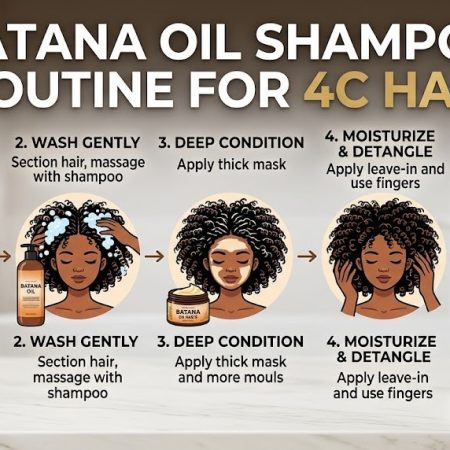
Your hair naturally struggles to retain moisture because scalp oils can’t travel easily down coiled strands. Use batana oil shampoo once or twice a week maximum. Always follow with a heavy conditioner or deep conditioning mask. The “LOC method” (Leave-in, Oil, Cream) works beautifully when you add a small amount of raw batana oil as your oil layer after washing.
Fine or Low-Porosity Hair
Use less product per wash — a pea-sized to dime-sized amount. Apply the shampoo to soaking wet hair rather than damp hair, which helps thin hair absorb the formula without getting weighed down. Skip raw oil leave-ins on the scalp; the shampoo alone provides sufficient nourishment for this hair type.
Chemically Treated or Heat-Damaged Hair
You can use batana oil shampoo more freely (2–3x per week) since this hair type desperately needs the deep conditioning and breakage-reduction benefits. Pair with weekly deep conditioning masks for accelerated repair. The oleic acid’s deep shaft penetration is especially valuable here.
Dry or Flaky Scalp
Focus the scalp massage specifically on flaky areas, using slightly more time there than elsewhere. The anti-inflammatory fatty acids in batana oil shampoo work cumulatively — weekly consistency is more important than intensity in any single session.
Common Mistakes That Kill Your Results
Using too much product. More shampoo doesn’t mean more benefit — it means harder rinsing and more likely buildup. Start small and adjust upward only if your scalp doesn’t feel clean after washing.
Massaging with your nails. Your fingertip pads provide the right pressure and movement. Nails scratch the scalp, cause micro-abrasion, and can introduce bacteria into hair follicles. This is a surprisingly common habit that people don’t realize they’re doing.
Applying to wet hair and moving on immediately. The batana oil compounds in your shampoo need a minimum of contact time to do anything beyond surface cleaning. Those 60–120 seconds of sitting after massage aren’t optional for a growth-focused routine.
Rinsing with hot water. Hot water strips protective oils, disrupts the scalp microbiome, and lifts the cuticle in a way that causes moisture to escape — the opposite of what a nourishing formula is trying to achieve.
Quitting after two to three weeks. Hair grows approximately half an inch per month. Structural changes at the follicle level take 6–8 weeks to show visible results in the hair you can actually see. Scalp health improvements come faster (most people notice changes within 2–4 weeks), but meaningful growth-related changes require 2–3 months of consistent use. Anyone who quits in week three was just getting started.
Ignoring the rest of your routine. Batana oil shampoo works on your scalp and hair — it doesn’t work on your diet, stress levels, sleep, or hormones. If you’re dealing with significant hair loss, the shampoo supports a healthy environment for growth, but it doesn’t replace the need to address root causes. Consistent use alongside good nutrition, hydration, and — where relevant — dermatologist-recommended treatments, is where real results compound.
Expected Timeline: What to Look For and When
| Timeframe | What You Should Notice |
| Weeks 1–2 | Hair feels softer and more manageable after washing; scalp feels less tight or dry |
| Weeks 3–4 | Reduced frizz between washes; noticeably less breakage during combing |
| Month 2 | Scalp health clearly improved; hair retaining moisture better between washes |
| Month 3 | Potentially visible improvement in density and length retention; baby hairs may appear in previously thinning areas |
| Month 4–6 | Compounding results — this is where the full growth-support potential becomes visible for those using the full routine |
One More Thing Worth Knowing
The biggest predictor of results with any hair care routine — including one built around batana oil shampoo — isn’t the product quality. It’s consistency over time.
The Miskito people of Honduras, who are the origin of this oil and have been using it for over 500 years, didn’t do a weekly treatment and judge it after a month. It was a daily, generational practice woven into the fabric of how they cared for themselves. The “miracle” their hair represents isn’t about a single ingredient — it’s about consistent, informed, ongoing care.
You don’t need to wash your hair every day to capture that spirit. But you do need to show up, use the right technique, and give it enough time to work.
That’s the part most people skip. Now you know not to.