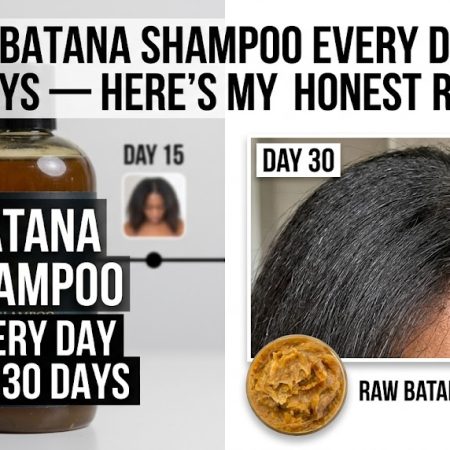
Postpartum Hair Loss? Why Batana Oil Shampoo Is Going Viral Among New Moms

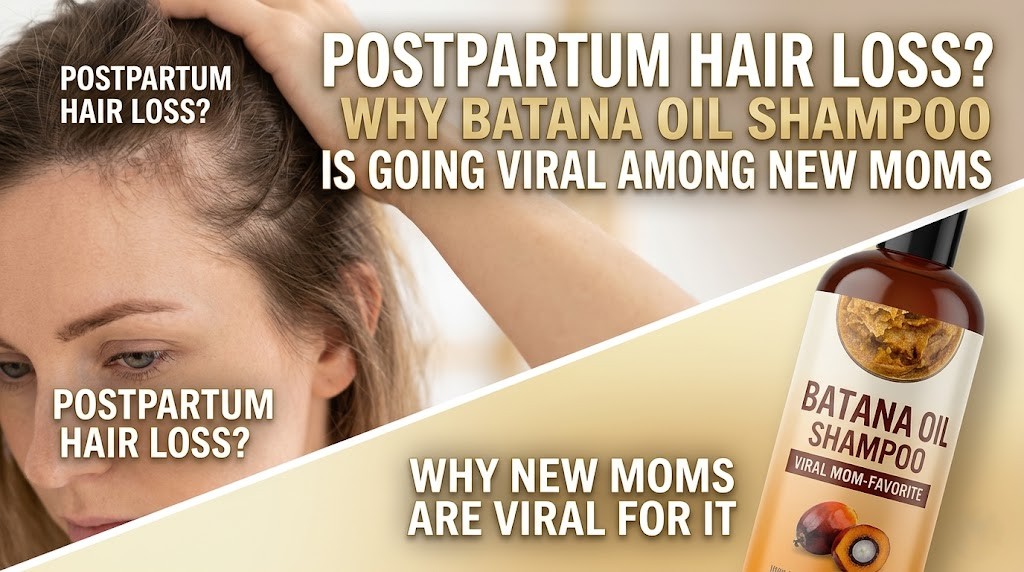
You survived nine months of pregnancy, labor, delivery, and those first exhausting weeks with a newborn. You figured the hardest part was behind you — and then it happened.
The shower drain started looking like a small animal lives there. Your ponytail felt thinner than it used to. You ran your fingers through your hair and came away with a handful of it. And nobody warned you this was coming.
Postpartum hair loss affects the majority of new moms, yet it somehow still blindsides almost all of them. The good news? It’s completely normal, it’s temporary, and there’s something gentle and natural that thousands of new moms are now reaching for to get through it — batana oil shampoo.
Here’s everything you need to know: what’s actually happening to your hair, why batana oil shampoo is going viral in new mom communities, and exactly how to use it to support regrowth.
First, What’s Actually Happening to Your Hair?
This part is important, because understanding the why behind postpartum hair loss takes away a lot of the panic around it.
During pregnancy, your estrogen levels surge dramatically. One of estrogen’s effects is prolonging the growth phase (called the anagen phase) of your hair cycle. This means the hairs that would normally shed gradually just… stay. Your hair grows thicker and fuller during pregnancy not only because new hairs are growing, but because the old ones aren’t falling out the way they normally would.
Then you give birth.
Estrogen levels drop sharply after delivery as your body begins returning to its pre-pregnancy hormonal state. This sudden drop triggers a synchronized shift — a large number of hair follicles all enter the resting phase (telogen) at once. About three to four months after delivery, all of those resting hairs begin shedding simultaneously. Dermatologists call this condition telogen effluvium, and it’s exactly why postpartum hair loss can feel so sudden and alarming.
To put numbers to it: normally you shed up to 100 hairs per day. In telogen effluvium, you can shed significantly more — and because so many follicles are cycling together, it all seems to happen at once rather than gradually.
The shedding typically peaks around three to six months postpartum and usually resolves on its own within six to twelve months. For most women, hair fullness returns to normal by the time baby reaches their first birthday.
Important: Postpartum hair loss is a normal hormonal process, not a disease. However, if hair loss continues beyond six months postpartum, you notice distinct bald patches, or you’re experiencing fatigue, weight changes, or other symptoms alongside the shedding, it’s worth visiting your doctor to rule out postpartum thyroid dysfunction or iron deficiency anemia — both of which are more common in new moms and can contribute to hair loss independently.
Why Normal Hair Loss Feels Worse Than It Is
There’s a psychological layer to postpartum hair loss that doesn’t get enough attention. You’re sleep-deprived, your body has been through an enormous physical transformation, your identity is shifting, and now clumps of hair are clogging the drain every morning. It’s easy to catastrophize.
What helps is this: you’re not losing new hair. You’re losing borrowed hair. All of that extra fullness you had during pregnancy was on loan. The shedding is just your hair cycle returning to its normal rhythm — it just does it in a rush rather than gradually, which is why it looks so dramatic.
Still, “it’s normal” doesn’t mean “there’s nothing you can do.” The choices you make in your hair care routine during this period matter — they can either accelerate the damage or help your scalp stay healthy and ready for regrowth. That’s exactly where batana oil shampoo comes in.
Why Batana Oil Shampoo Is Going Viral Among New Moms
If you’ve spent any time in new mom Facebook groups, mom TikTok, or postpartum Reddit threads, you’ve probably seen batana oil shampoo come up more than once. It’s not a sponsored trend — it’s word of mouth, mom to mom, sharing something that’s actually working.
So what’s driving the buzz?
1. It’s Gentle Enough for a New Mom’s Sensitive Postpartum Scalp
Many postpartum women notice their scalp becomes more sensitive after delivery — drier, more prone to irritation, sometimes even flaky. This is part of the same hormonal shift that causes the shedding. The last thing a sensitized scalp needs is a shampoo loaded with sulfates (harsh detergents) and synthetic fragrances.
Batana oil shampoos are formulated to be sulfate-free and paraben-free, which means they cleanse the scalp and hair without stripping the delicate moisture barrier. The batana oil itself — derived from the American oil palm (Elaeis oleifera) of Honduras — is rich in essential fatty acids and antioxidants that actively soothe and nourish the scalp during each wash.
2. Batana Oil Supports the Scalp Environment Where Hair Grows
Here’s the key distinction: batana oil shampoo doesn’t override your hormones. Nothing topical can stop the telogen effluvium process that postpartum hormones set in motion — and any product claiming otherwise is overpromising. What batana oil does do is create the healthiest possible scalp environment for hair follicles to function well and regrow efficiently.
Batana oil contains linoleic acid (omega-6), which research suggests may help inhibit 5-alpha reductase — an enzyme involved in hair follicle miniaturization. It’s also rich in oleic acid, which allows it to penetrate the hair shaft rather than just sitting on the surface, delivering nourishment where it’s actually needed.
The regular scalp massage that comes with applying a batana oil shampoo also boosts blood circulation to follicles. Better circulation means better nutrient delivery to the follicle — and healthier follicles are better positioned to produce strong, thick new strands.
3. The Ritual Itself Matters for New Moms
This one is less talked about but deeply real: new moms are exhausted, touched out, and often putting themselves last on every list. A five-minute scalp massage with a nourishing shampoo is a tiny, doable act of self-care in an otherwise overwhelming season.
Many moms report that the ritual of applying batana oil — the warmth, the massage, the sense of doing something — is almost as valuable as the results themselves. It’s a moment that belongs entirely to you in a day that belongs entirely to someone else.
4. It Works With the Hair You Still Have
Postpartum hair loss is most visible at the hairline — the edges, the temples, the crown. These are also the most emotionally significant areas. Batana oil shampoo, combined with a scalp massage routine, is particularly popular among new moms for its reputation in supporting edge and hairline regrowth. Users who massage batana oil into the hairline 2–3 times weekly report noticing baby hairs — the first sign of regrowth — as early as four to six weeks in.
The shampoo component also helps the hair you haven’t shed look its best: fuller, shinier, with less frizz and breakage. When you’re losing hair, taking care of what remains matters just as much.
What to Realistically Expect (No Miracle Claims Here)
Let’s be honest, because you deserve honesty — especially as a new mom who doesn’t have time or energy for products that overpromise.
Batana oil shampoo will not stop postpartum hair loss. Telogen effluvium is a hormonal process that runs its own course. No shampoo can override that biology.
What batana oil shampoo can do:
- Keep the scalp nourished and healthy throughout the shedding phase
- Reduce breakage so that hair loss from mechanical damage doesn’t add on top of the hormonal shedding
- Support a healthy scalp environment that’s ready for regrowth when the hormones stabilize
- Reduce frizz, dryness, and brittleness in the hair that remains
- Potentially support earlier visibility of new growth through scalp circulation benefits
The women seeing the most notable results are the ones using batana oil shampoo consistently as part of a complete routine — not as a once-a-week treatment, but as their primary shampoo, paired with scalp massage several times a week.
A realistic timeline:
- Weeks 1–3: Hair feels softer, scalp less dry, no stripped feeling after washing.
- Weeks 4–6: Baby hairs may begin appearing at the hairline. Daily shedding often feels less dramatic.
- Months 2–3: Noticeable improvement in the texture and density of regrowing hair.
- Months 4–6: As hormones stabilize, regrowth becomes more visible. Hair returns progressively to pre-pregnancy fullness.
A Simple Batana Oil Shampoo Routine for Postpartum Hair
This routine is designed to be realistic for new moms — no hour-long hair days required.
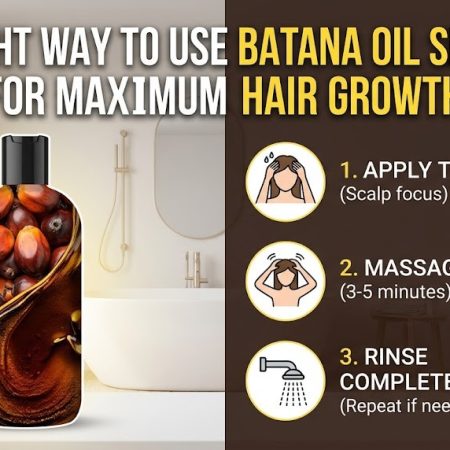
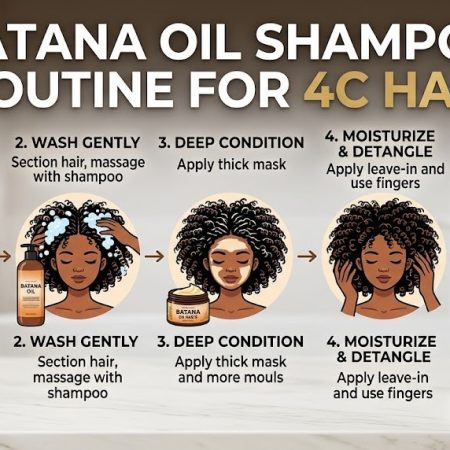
Wash Days (2x per week is ideal)
Step 1 — Pre-Wash Scalp Oil (10–15 minutes) If you have a few minutes before the shower, warm a small amount of pure batana oil between your palms and massage it into your scalp — particularly along the hairline, temples, and any areas of noticeable thinning. Leave it on for at least 10–15 minutes before washing. This pre-poo step protects strands during cleansing and gives the oil time to penetrate.
Step 2 — Batana Oil Shampoo Wet hair thoroughly with lukewarm water (not hot — hot water strips moisture and irritates an already-sensitive postpartum scalp). Apply your batana oil shampoo to the scalp, not the length of hair. Use your fingertips in gentle circular motions — this is your daily scalp massage, built into your wash. Focus on areas of concern: the hairline, temples, crown. Rinse well.
Step 3 — Conditioner Follow with a moisturizing conditioner from mid-length to ends. Postpartum hair is often dry and fragile at the ends. Conditioner helps prevent the breakage that adds to the visual impact of shedding.
Step 4 — Cool Rinse End with a rinse of cool water. This closes the hair cuticle, adds shine, and helps seal in the conditioning benefits.
Between Wash Days (2–3x per week)
Warm a few drops of batana oil between your fingertips and massage directly into the scalp for 5 minutes. Focus on the hairline and any thinning areas. You don’t need to wash it out — it absorbs well without leaving a greasy residue when used in small amounts.
Every Night
Sleep with a satin or silk bonnet or pillowcase. Cotton absorbs moisture from postpartum hair (which is already fragile) all night. This one switch alone can dramatically reduce the appearance of thinning by preventing the mechanical breakage that cotton causes.
A Note for Breastfeeding Moms
If you’re currently breastfeeding, you’re rightfully more cautious about everything you put in and on your body. The good news: a sulfate-free batana oil shampoo is a topical product, and there’s no evidence that using a plant-based oil shampoo externally poses any risk during breastfeeding.
That said, the general advice applies: if you have concerns or sensitivities, check in with your healthcare provider or OB before adding anything new to your routine. This is especially true if you’re considering any oral supplement for hair loss. For topical shampoos, the risk profile is considered very low — but your provider knows your specific situation best.
Other Things That Help (Because Batana Oil Shampoo Isn’t the Whole Story)
Postpartum hair recovery is holistic. The shampoo is one piece of the puzzle — here are the others:
Nutrition matters enormously. Your hair follicles need iron, protein, biotin, omega-3 fatty acids, and zinc to produce healthy strands. Continuing your prenatal vitamin postpartum is one of the easiest ways to support hair regrowth from the inside. If you’re breastfeeding and concerned about deficiencies, ask your doctor about iron levels specifically — iron deficiency is common in postpartum women and significantly worsens hair shedding.
Be gentle with your hair. Tight ponytails, buns, and braids put tension on already-fragile postpartum hair. Opt for loose styles. Use a wide-tooth comb and detangle from ends upward. Avoid excessive heat styling.
Manage stress where you can. Physical and emotional stress independently contribute to hair shedding. This is genuinely hard advice when you’re a new parent, but even small stress-reducing practices — a 5-minute walk, a shower that’s yours alone, asking for help — have a cumulative effect on your body’s overall recovery.
Give it time. The most important thing you can do is resist the urge to panic. Postpartum hair loss is temporary. It resolves. Your hair will come back.
Frequently Asked Questions
When should I start using batana oil shampoo for postpartum hair loss? You can start as soon as you notice increased shedding — typically around 3 months postpartum. Some moms start using it earlier as a preventative measure. There’s no wrong time to switch to a gentler, nourishing shampoo.
How often should I wash my hair with batana oil shampoo postpartum? Twice a week is typically ideal. Washing too frequently can strip the scalp of its natural oils, which are already disrupted by hormonal changes. If your scalp tends to get oily between washes, use a gentle dry shampoo on off days rather than increasing wash frequency.
Can I use batana oil shampoo if I have a c-section? Yes. Postpartum hair loss and batana oil shampoo are not related to delivery method. Telogen effluvium occurs regardless of how you delivered.
Is it safe to use batana oil shampoo if my baby has sensitive skin? Batana oil shampoo doesn’t transfer to breast milk, and the amounts that might transfer through skin contact during a cuddle are negligible. If you’re concerned, simply rinse your hair thoroughly after washing. A sulfate-free, paraben-free formula minimizes any potential for skin irritation even at that level of indirect contact.
Will batana oil shampoo help with postpartum edges? This is one of the most common use cases new moms report. The hairline and edges tend to be the most visibly affected areas in postpartum hair loss. Consistent scalp massage with batana oil — either via the shampoo application or with a dedicated scalp oil — specifically to the hairline several times a week is associated with baby hair regrowth in this area.
How long until I see results? For scalp health improvements (less dryness, less irritation), results are often noticeable within the first week or two. For visible regrowth — baby hairs at the hairline, less overall shedding — most users report changes between weeks 4 and 8 with consistent use.
The Bottom Line
Postpartum hair loss is a rite of passage nobody talks about enough. You grew a whole human being — your body is allowed to take some time recalibrating, even if that recalibration comes at the expense of your ponytail for a while.
What batana oil shampoo offers new moms isn’t a miracle. It’s something more practical: a gentle, nourishing daily ritual that supports scalp health through one of the most hormonally turbulent periods of your life. It won’t stop the shedding, but it will create the best possible environment for strong, healthy regrowth — and it’ll do it while being kind to a scalp that’s already been through enough.
If you’re a new mom looking for something that feels like doing something without adding stress to your already full plate, this is it.