Sulfate-Free Shampoo: Why It Matters and Why Batana Oil Is the Best Option

Walk down any pharmacy hair care aisle and you’ll notice a shift that’s been building for years. Shelf after shelf of shampoos now proudly declare themselves “sulfate-free” — sometimes in larger font than the product name itself. New mom communities swear by it. Natural hair boards treat it as gospel. Dermatologists recommend it for sensitive scalps. Curly hair educators have made it a non-negotiable.
But why? What exactly are sulfates doing to your hair that makes their absence worth calling out on a label? And if you’re going sulfate-free, why does batana oil shampoo stand out as the best choice you can make?
This guide answers both questions from the ground up — the chemistry, the hair science, the real-world impact on your strands and scalp, and exactly why batana oil elevates the sulfate-free formula into something that doesn’t just avoid harm, but actively restores and strengthens.
What Sulfates Actually Are (And What They Do)
To understand why sulfate-free matters, you need to understand what sulfates are in the first place — because most people know the label but not the mechanism.
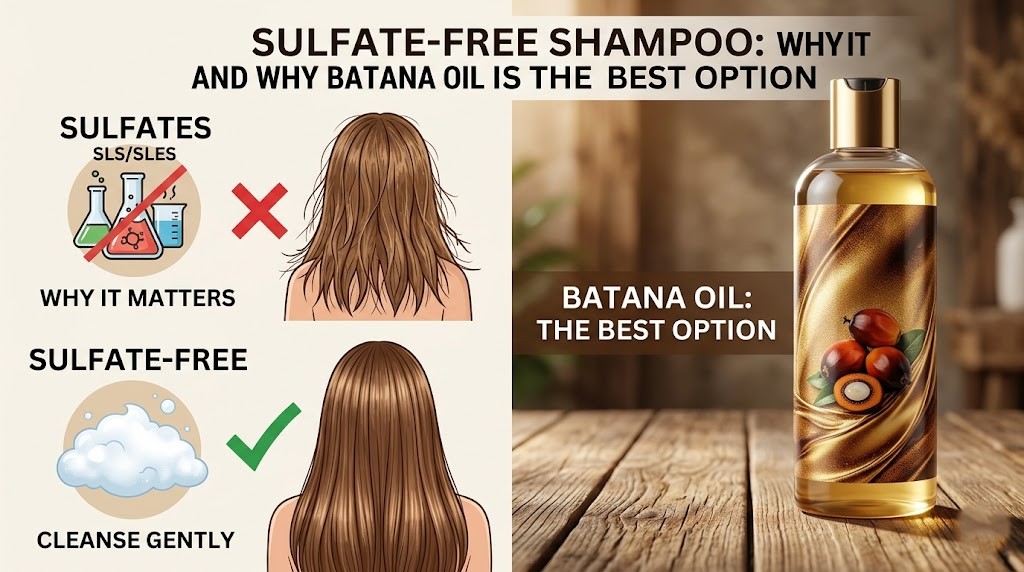
Sulfates are a class of surfactants — surface-active agents — used in shampoos primarily as cleansing and foaming agents. The two most common are sodium lauryl sulfate (SLS) and sodium laureth sulfate (SLES). They work through a dual-action molecular structure: one end of the molecule bonds to oils and impurities, the other bonds to water, allowing everything to rinse away cleanly. They’re also responsible for the thick, satisfying lather that most people associate with “a good clean.”
That part is true. Sulfates are exceptionally effective cleaners.
The problem is that effectiveness. SLS in particular is such a powerful degreaser that it doesn’t distinguish between the dirt and excess sebum you want removed and the natural protective oils your hair and scalp need to remain healthy. It strips both with equal efficiency.
<br>
The Specific Damage Sulfates Can Cause
Here’s what the research tells us:
Protein loss. A study widely cited in hair science found that hair immersed in a sodium lauryl sulfate solution loses approximately twice as much protein as hair immersed in plain water. Since hair is made primarily of keratin protein, this erosion weakens the very structure of the strand — making it more prone to breakage, split ends, and loss of elasticity over time.
Scalp stripping and dryness. Because sulfates remove natural oils so completely, the scalp can become chronically dry and irritated with repeated use. For people with sensitive skin, this can manifest as redness, flaking, and itching that can be mistaken for dandruff — when it’s actually a reaction to the shampoo itself.
Color fade. For anyone with dyed or color-treated hair, SLS is one of the biggest enemies of vibrancy. Sulfates cause the hair cuticle to swell and the color molecules deposited inside to leach out, dramatically shortening how long any color treatment holds. This applies to permanent dye, semi-permanent color, highlights, and toning treatments alike.
Frizz and moisture loss. When the hair’s natural oil barrier is stripped, it becomes more porous and reactive to humidity. This is one of the primary causes of the frizz cycle: you shampoo with a sulfate product, the hair dries out, the cuticle lifts, moisture enters and exits unevenly, and frizz is the result. Then you use more product to manage the frizz — which ironically builds up and requires another stripping wash.
Scalp condition aggravation. The American Academy of Dermatology specifically recommends sulfate-free shampoos for people with conditions like rosacea, eczema, seborrheic dermatitis, and psoriasis. Sulfates can elevate inflammation and irritation in already-sensitized scalps, making these conditions harder to manage. For people dealing with dandruff, switching to a sulfate-free formula is often one of the first recommendations a dermatologist will make.
Follicle deposit concerns. Studies on SLS have found that it can deposit in hair follicles — the tiny pores in your scalp that hair grows from. The Cosmetic Ingredient Review Panel recommends that products applied to the skin contain no more than 1% SLS concentration for this reason. Standard shampoo formulations typically use SLS at concentrations between 10–25%, which rinses off — but the concern about follicle-level residue remains part of why many hair professionals recommend minimizing exposure.
<br>
Are Sulfates Completely Harmless?
A fair and honest answer: sulfates are not categorically dangerous. They’re considered safe for use in cosmetics, and if you have a healthy, oily scalp and wash infrequently, a sulfate shampoo may work fine for you. There is no definitive clinical evidence linking sulfates to long-term hair loss in healthy individuals.
But “safe” and “ideal” are two different things. For the majority of hair and scalp types — dry hair, curly or coily hair, color-treated hair, sensitive or irritated scalps, thinning hair, natural hair, and aging hair — the routine stripping that sulfates cause actively works against your hair health goals. And for these groups, the evidence for switching is compelling.
Who Specifically Needs Sulfate-Free Shampoo
You should seriously consider going sulfate-free if any of the following apply:
Curly, coily, or kinky hair (types 3A–4C). Tightly coiled hair is structurally drier than straight hair because the natural oils from your scalp have difficulty traveling down the length of a coiled strand. Using sulfates on hair that’s already moisture-challenged strips the limited natural oils that exist, leaving strands brittle, frizzy, and prone to breakage. Sulfate-free is essentially the baseline standard in the natural hair community for this reason.
Color-treated or chemically processed hair. Whether you’ve colored, highlighted, bleached, keratin-treated, or relaxed your hair, the chemical process already alters the hair’s cuticle structure. Sulfates accelerate the degradation of color and the breakdown of chemical treatments — your investment fades faster, your hair gets drier, and the treated hair becomes more fragile.
Dry or fine hair. Hair that’s already lacking in moisture and volume doesn’t need a product that removes more of both. Sulfate-free shampoos use gentler cleansing agents that clean without over-stripping, leaving fine or dry hair with more body and better moisture balance.
Sensitive, reactive, or condition-prone scalps. If you experience chronic scalp dryness, itching, flaking, redness, or conditions like eczema, psoriasis, or contact dermatitis, sulfates are likely making things worse. Switching to a sulfate-free formula removes a known irritant from the equation.
Postpartum hair. Hormonal shifts after childbirth already make the scalp more sensitive and the hair more fragile. Combining that vulnerability with a sulfate shampoo’s stripping action compounds both problems. (See our full guide on postpartum hair loss for more on this.)
Anyone over 40. Hair naturally becomes finer, drier, and more fragile with age. Sulfates take more from aging hair than a younger, more resilient scalp can recover from easily.
Anyone who washes frequently. Daily or near-daily washers expose their scalp to sulfate stripping repeatedly, which accumulates over time into chronic dryness and protein depletion. If you wash every day, sulfate-free is particularly important.
What “Sulfate-Free” Actually Means on the Label
One important clarification before we go further: sulfate-free means the formula doesn’t contain traditional sulfate surfactants like SLS or SLES. It does not mean the product contains no cleansing agents at all. Shampoo, by definition, must clean.
Sulfate-free shampoos use alternative, gentler surfactants — typically derived from plant-based sources — to achieve the same cleansing result without the harshness. Common ones include cocamidopropyl betaine (derived from coconut oil), sodium cocoyl isethionate, and sodium lauroyl sarcosinate. These surfactants clean effectively, produce a gentler but still satisfying lather, and don’t strip the hair’s natural lipid barrier.
A quality sulfate-free shampoo isn’t a compromise. It’s a reformulation that achieves the same goal through smarter, gentler chemistry.
Why Batana Oil Shampoo Is the Best Sulfate-Free Option
Going sulfate-free is the starting point. What transforms a good sulfate-free shampoo into a great one is what it does with the absence of harsh chemicals — whether it simply avoids the negative, or actively adds something powerful in its place.
This is where batana oil shampoo separates itself from the field.
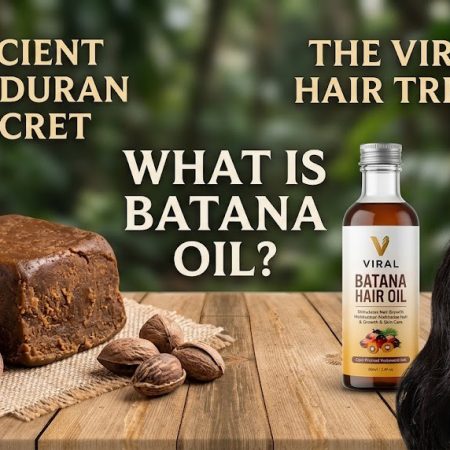
What Is Batana Oil?
Batana oil is pressed from the nuts of the American oil palm (Elaeis oleifera), a tree native to the rainforests of Central America. For centuries, the Miskito communities of La Mosquitia, Honduras — particularly the Tawira women, known historically as “the people of beautiful hair” — have used batana oil as a cornerstone of their hair care. Their tradition of thick, healthy, lustrous hair across generations is what first drew modern attention to this ingredient.
The oil is extracted via a cold-press method, which preserves its full nutrient profile. It’s rich in oleic acid (omega-9), linoleic acid (omega-6), vitamin E derivatives, phytosterols, and natural antioxidants — a combination that makes it uniquely powerful for hair.
The Science Behind Batana Oil’s Hair Benefits
Deep shaft penetration, not just surface coating. Most oils applied to hair simply coat the outer cuticle, providing temporary shine and some protection from friction. Batana oil’s high oleic acid content (40–50%) allows it to actually penetrate the hair shaft rather than sitting on the surface. This means it delivers nourishment to the cortex — the inner structure of the hair — where moisture is stored and where structural integrity is determined. Surface coatings wash off. Shaft penetration provides lasting benefit.
Linoleic acid and follicle health. Research indicates that linoleic acid (omega-6), abundant in batana oil, may inhibit an enzyme called 5-alpha reductase. This enzyme is involved in the process of follicle miniaturization — the gradual shrinking of hair follicles that leads to thinning hair over time. While batana oil is not a medical treatment for hair loss, its linoleic acid content provides a meaningful biological basis for supporting follicle health at the scalp level.
Protein loss protection. Here’s the elegant complement to the sulfate problem: while sulfates strip hair protein, batana oil’s fatty acid profile helps reinforce it. The oil’s emollient properties support the structural integrity of the keratin in each strand, helping hair resist the brittleness, breakage, and split ends that come from protein depletion. In a batana oil shampoo, these benefits are delivered during every wash — cleansing and repairing simultaneously.
Antioxidant scalp protection. The natural vitamin E derivatives and antioxidants in batana oil help protect the scalp from oxidative stress — damage caused by UV exposure, pollution, heat styling, and environmental factors. A healthier scalp is a better-functioning follicle environment, and better follicle function means stronger, thicker new growth over time.
Frizz reduction through cuticle smoothing. Because batana oil penetrates the shaft and helps normalize the hair’s moisture balance from within, it works at the root cause of frizz rather than masking it. Frizz is largely a product of a raised, uneven cuticle that reacts unpredictably to humidity. Hair that’s internally hydrated and structurally intact has a smoother, more consistently flat cuticle — the result is reduced frizz, enhanced shine, and better manageability that doesn’t depend on heavy styling products.
Scalp soothing. The phytosterols in batana oil have natural anti-inflammatory properties that calm scalp irritation, reduce dryness, and create a healthier environment for hair growth. For people with chronic scalp sensitivity — the kind that sulfate shampoos typically worsen — batana oil shampoo addresses the problem directly while cleansing.
The Combination Effect: Sulfate-Free Cleansing + Batana Oil Nourishment
The reason batana oil shampoo is the best sulfate-free option isn’t just that it avoids stripping your hair. It’s that the formula delivers active restoration every single time you wash. Most shampoos — even sulfate-free ones — are primarily concerned with cleansing. They’re neutral at best. A well-formulated batana oil shampoo is a net positive: it cleanses gently, and it simultaneously deposits nutrients that repair, strengthen, and hydrate the hair shaft.
Think of it this way: a regular sulfate shampoo leaves your hair in a negative state (stripped). A basic sulfate-free shampoo returns your hair to neutral (not stripped, not notably improved). A batana oil shampoo moves your hair to a positive state — cleaner, more hydrated, more structurally sound — every time you use it. Over weeks and months of consistent use, the cumulative effect on hair health becomes increasingly visible.
What to Look for in a Batana Oil Shampoo
Not all batana oil shampoos are formulated equally. Here’s how to evaluate a product:
Batana oil should appear in the ingredient list, not just the name. The INCI (International Nomenclature of Cosmetic Ingredients) name for batana oil is Elaeis oleifera kernel oil. If it doesn’t appear in the ingredient list, the “batana” in the product name is marketing, not substance.
Sulfate-free certification is clearly stated. Look for “sulfate-free” and confirm by checking the ingredient list for sodium lauryl sulfate, sodium laureth sulfate, and ammonium laureth sulfate. If any of these appear, the product is not truly sulfate-free.
Paraben-free is a meaningful secondary signal. Parabens are synthetic preservatives that some people react poorly to, especially those with sensitive scalps. A quality batana oil shampoo formulated with hair health in mind typically omits these as well.
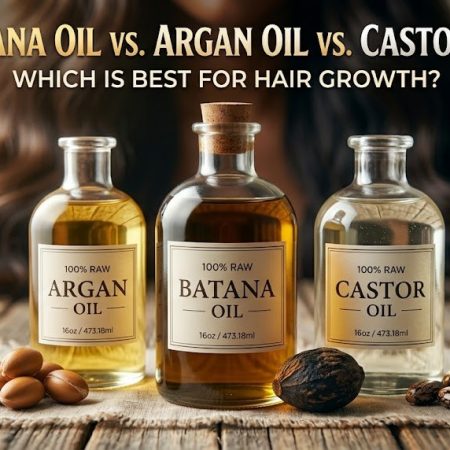
The formula should include complementary ingredients. The best batana oil shampoos pair the core oil with ingredients that enhance its effects: aloe vera for scalp soothing, biotin for follicle support, rosemary oil for scalp circulation, coconut oil or argan oil for additional moisture. A nutrient-rich formula signals that the product is designed for outcomes, not just marketing.
Concentration matters. Batana oil should be among the first several oils listed in the ingredients — not buried near the end. The further down an ingredient appears, the lower its concentration and the weaker its impact.
How to Get the Most from Your Sulfate-Free Batana Oil Shampoo
Switching shampoos is simple. Getting the most out of a sulfate-free formula requires a small adjustment period and a few technique tweaks:
Expect a transition period. If you’ve been using sulfate shampoos for years, your scalp has been in a cycle of over-stripping and over-compensating — producing extra oil to replace what’s being removed. When you switch to a sulfate-free formula, the scalp may take 2–4 weeks to recalibrate and produce oil more normally. During this time, hair might feel slightly different than you’re used to. This is normal. Push through it.
Use lukewarm water, not hot. Hot water opens the cuticle aggressively and strips oils — the exact opposite of what you’re trying to achieve. Lukewarm water cleanses effectively while keeping the cuticle calmer. Finish with a cool rinse to close the cuticle and seal in moisture.
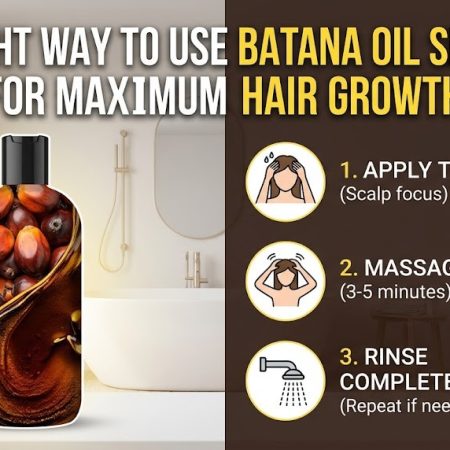
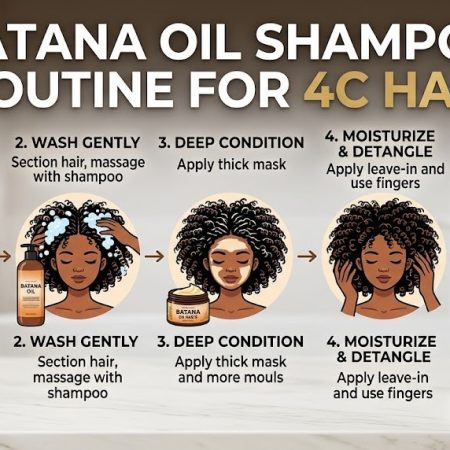
Apply shampoo to the scalp, not the length. Your scalp is where cleansing is needed. The mid-lengths and ends need moisture, not more detergent. Apply sulfate-free batana oil shampoo to your scalp and let it rinse through the length of your hair naturally as you wash it out.
Don’t skip the scalp massage. Work the shampoo into your scalp using your fingertips in circular motions. This serves double duty: it ensures effective cleansing, and it stimulates blood circulation in the scalp — which supports follicle health and can encourage stronger growth over time.
Adjust wash frequency. Sulfate-free shampoos are gentle enough that they don’t require the same buffer of space between washes that sulfate products do. For dry or textured hair, washing 1–2 times per week works well. For oily scalps, some sulfate-free formulas are gentle enough for more frequent use.
Follow with a conditioner. A sulfate-free batana oil shampoo cleanses and nourishes — but a matching conditioner or deep conditioner applied to the mid-lengths and ends seals in additional moisture and keeps the strand’s protein-lipid structure intact.
The Bigger Picture: Why Your Shampoo Choice Matters More Than You Think
Here’s the thing that most hair care marketing gets backwards: shampoo is not a passive product. It’s not simply a cleaning agent that leaves your hair ready for other products to do the real work.
Shampoo sets the entire condition of your hair going into the rest of your routine. When you shampoo with sulfates, you start every styling session from a state of depletion — stripped of natural oils, protein-depleted, cuticle disrupted. Every product you apply after that is trying to compensate for damage caused at step one.
When you shampoo with a sulfate-free batana oil formula, you start from a different baseline entirely: scalp nourished, hair shaft reinforced, moisture balance maintained, cuticle smooth. Every step that follows — conditioning, styling, protecting — builds on a foundation that hasn’t been undermined by the wash itself.
Over weeks, months, and years, this compounds. The hair that grows in is healthier. The strands that exist are stronger. The scalp that produces them is better maintained. The difference between a sulfate-heavy routine and a batana oil shampoo routine isn’t just what happens on wash day — it’s the cumulative trajectory of your hair’s health.
Common Questions About Sulfate-Free Batana Oil Shampoo
Will sulfate-free shampoo clean my hair as well? Yes — it cleans differently, not less effectively. Sulfate-free shampoos use alternative surfactants that remove dirt, oil, and product buildup without the aggressive over-stripping. If you’re using heavy styling products like silicone-based serums or butters, you may benefit from an occasional clarifying wash (with a gentle clarifying formula) every 3–4 weeks to prevent buildup — but your regular sulfate-free batana oil shampoo will handle day-to-day cleansing perfectly.
Will it lather as much? Sulfate-free shampoos typically produce less foam than sulfate shampoos — but the lather has nothing to do with how well a shampoo cleans. Foam is just a cosmetic byproduct of the surfactant chemistry. Clean is determined by the surfactant’s ability to lift dirt and oil — not the quantity of bubbles it produces.
I have an oily scalp. Is sulfate-free right for me? An oily scalp doesn’t automatically mean you need sulfates. In fact, one reason scalps become chronically oily is because sulfate stripping causes them to overcompensate with sebum production. Switching to a sulfate-free batana oil shampoo and giving your scalp time to recalibrate often normalizes oil production. That said, very oily scalps may benefit from washing slightly more frequently rather than using a harsher product.
Is batana oil shampoo safe for all hair types? Yes. Batana oil is beneficial across hair types — straight, wavy, curly, coily, fine, thick, natural, color-treated, and chemically processed. The sulfate-free formula is gentle enough for all textures and scalp sensitivities. Those with curly or coily hair (3A–4C) tend to see the most dramatic benefits given how particularly damaging sulfates are for drier, textured hair types.
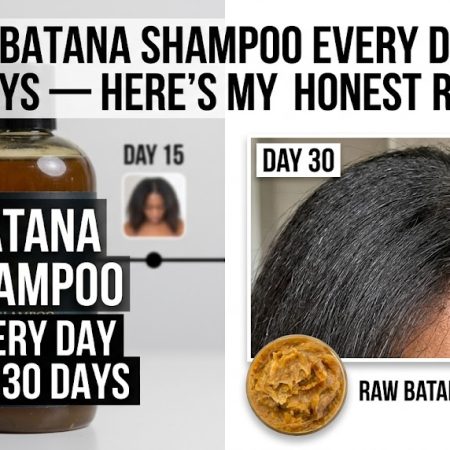
How quickly will I notice a difference? Most people notice an improvement in how their hair feels after the first 1–2 washes — softer, less stripped, shinier. Changes in scalp health (reduced dryness, less irritation) typically follow within the first couple of weeks. More significant changes in hair strength, thickness, and growth typically become visible over 4–8 weeks of consistent use.
Can I use batana oil shampoo on color-treated hair? Absolutely — it’s one of the best choices for color-treated hair. The sulfate-free formula won’t accelerate color fade, and batana oil’s nourishing properties help repair and strengthen hair that’s been through the chemical process of dyeing or bleaching.
Final Thoughts: Start from a Better Place
Every hair care routine starts with a shampoo. If that first step is undermining your hair — stripping it of protein and moisture, irritating your scalp, accelerating color loss, triggering the frizz cycle — then everything else you do in your routine is fighting an uphill battle against the product you’re using to begin.
Sulfate-free isn’t a trend. It’s a structural improvement in how shampoo interacts with your hair’s biology. And batana oil isn’t just a label to make a bottle look more natural — it’s one of the most nutrient-dense, penetrating oils available for hair, backed by centuries of use by communities whose hair health speaks for itself.
Together, they make something genuinely better: a shampoo that cleans your hair and improves it. Every single wash.